Why Tempo is More Powerful Than You Think
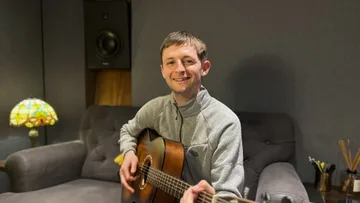
String and Tins' sound designer and composer Jim Stewart explores the psychological and creative impact of altering tempo, from sped-up social media tracks to extreme time-stretching
Jim Stewart - Sound Designer & Composer - String and Tins
Ever since I first started recording my own music with an Early Learning Centre keyboard and a Fisher-Price cassette player, I’ve been fascinated with the effect of speeding up or slowing down the playback. The consistently un-reliable batteries in the tape machine would often run low and turn my innocent singer-songwriter nonsense into a demonic, distorted crunchy mess. The curious thing was that this malfunction didn’t sound bad, but felt like something new and interesting that appealed to me. Why would that be?
I’ve always been interested in the effect that tempo can have on us psychologically. There have been countless scientific studies in the last 30 years that investigate the perception that altering the tempo of a piece of music has on the listener’s stimulation and response. I personally find that tempo and mood are related in a highly complex way, with context, physical conditions and my amount of focus sometimes drastically changing the perceived tempo of my favourite songs.
Nowadays as a sound designer and composer, I’m experimenting with how we can manipulate the tempo and pitch of all kinds of audio, to evoke a certain feeling or emotion in a listener. Over the years it’s been exciting to see the way producers, remixers and even fans can manipulate the tempo of an existing piece of music - changing its mood, effect and purpose.
SPEEDING THINGS UP
Modern life can move at an incredibly fast pace, and this speed of living is often mirrored in the way we consume media - with options to digest film, tv, podcasts and even voice notes at a faster rate than the creator intended.
It’s no surprise that music followed suit, and 2022 saw the rise of the ‘sped-up’ music trend. This began on social media, where fans/creators could up the tempo of their favourite tracks, creating cute chip-munked versions often combined with a viral dance. These became so successful that artists and labels began releasing their own official versions, to capitalise on the appeal right from the moment of a song’s release.
While this trend relied heavily on social media and its bite-sized attention economy, it also built on the concept and techniques of ‘Nightcore’ - pioneered by Thomas S. Nilsen and Steffen Ojala Søderholm in the early 2000s. In their own words, speeding up a song by 25-30% was “a way to make the music happier”.
I personally still can’t resist the temptation to flick the record player from 33rpm to 45rpm, resulting in a 35% increase in pitch and speed. Perhaps half the appeal as a fan is being able to interact with music you like - taking music that is fixed in time, and moulding it towards a personal preference.
SLOWING THINGS DOWN
Interestingly, we can explore a similar thread going in the opposite direction. The art of slowing music down to create something new has similarly gone through multiple evolutions. In the early 90s DJ Screw’s ‘Chopped and Screwed’ style involved slowing down funk, soul and hip-hop records and chopping them up in a tasteful way. Allegedly this started from an accident during a recording session where Screw accidentally hit the speed/pitch button on a turntable, but became such a success that he made over 300 beat tapes and developed a multitude of imitators.
In the 2010s, amidst the rise of internet micro-genres, we see the emergence of Vaporwave, similarly based on slowing-down classic tracks from the 80s and 90s. It is viewed as a wider ‘aesthetic’ or art style and, in contrast to the sped-up chipmunk trend, is “sometimes associated with an ambiguous or satirical take on consumer capitalism and pop culture.”
Today we have the evil-twin of ‘sped-up’ music which is fittingly-named ‘slowed + reverb’ - which taps into more of an atmospheric nostalgia than the other trends. Once again, these bootlegs were something that originated as user-generated content (in this case on Youtube) but are now something that major labels will often release alongside an official single.
EXTREME TIME STRETCHING
What would happen if the trend of slowing down music was pushed to its limits? Well, thanks to a delightful piece of software called Paulstretch developed in 2006 - a micro-genre emerged where users took unexpected source material (from Justin Bieber tracks to the Windows XP startup sound) and transformed them into surprisingly beautiful evolving textures, lasting for hours. In the original version of this software, you could stretch a file to a quintillion times its original length without changing the pitch.
In the film ‘Patience’ - a film by Optical Arts which was a "poetic ode to the power and beauty of patience in an age of instant gratification", I explored the idea of re-interpreting Debussy’s Clair De Lune in this style. The timeless opening chords are stretched by 5 times almost beyond recognition, re-imagining piano and string parts as frozen, glacial pads.
As music develops and adapts in the future, I think we’ll continue to see trends where fans interact with music they love, adjusting it towards personal preference. For me, the link between speed and emotion is continually fascinating and is something I will keep experimenting with in my work.